Print
Digital
Multimedia
Events
Awards
Newsletter
About
Daylight Books
Menu
Daylight Books
Art Illuminated
Print
Digital
Multimedia
Events
Awards
Newsletter
About
New Releases
View All
Book Details: HardcoverISBN-13: 9781954119567 Hardcover (two books in slipcase) Book 1: 168 pagesBook 2: 200 pages9in x 12inEssays by: Miss Rosen and Theodore ZinnBooks will ship in JulyDuring the 2020 Covid-19 lockdown, Vincent Cianni revisited over one hundred rolls of film from NYC Pride marches photographed between 1985 and 1995. For three months, he spent 6 to 8 hours a day, 5 to 6 days a week in the darkroom, editing and printing more than 140 photographs, many of which had never been printed before. The images documented Pride marches that took place during the height of another health crisis, the AIDS epidemic, the insidious and devastating disease that ravaged the LGBTQ+ community. The parallels between the two health crises became clear as news reports on the pandemic unfolded, revealing the same failures of government repeating themselves yet again. The marches also affirmed that healthcare, including treatment for people with HIV/AIDS, is a right. They demanded an end to the stigma and criminalization of HIV, as well as a more effective response from medical and government agencies and officials who fail to provide funding for research on medical treatment or offer legal, housing, and medical services to people with limited access. This demonstration of solidarity strengthened the sense of community and helped protect the rights earned from the Stonewall Rebellion in 1969 and the first NYC Pride March, also known as the Christopher Street Liberation Day March, which took place on June 28, 1970, one year after the Stonewall Rebellion."Archive/Journal: 1985-1995/2001" is a two-volume title in a slipcase bringing together two related bodies of work: Volume 1, "Archive 1985-1995," reproduces approximately 80 black-and-white photographs made of the NYC Pride marches during the height of the AIDS epidemic from 1985 to 1995. The photographs are accompanied by timelines, ephemera, newspaper articles, etc., and essays by Miss Rosen and Theodore Zinn, to expand the political, social, and historical understanding of the culture, activism, and milieu of the LGBTQ+ community. Volume 2: "Journal: 1985-2001" focuses on personal narratives culled from Cianni's journals, and visual stories of lovers and friends who were living with or who died from AIDS, reflecting on his journey with HIV and his experience with activism surrounding HIV/AIDS from the same period as the Pride photographs.Vincent Cianni is a documentary photographer, educator, and activist who explores social justice through image, text, and audio. He was Adjunct Associate Professor at the Parsons School of Design for 30 years and the founder and director of the Newburgh Community Photo Project, a grassroots community photo workshop in Newburgh, NY. We Skate Hardcore was published by NYU Press and the Center for Documentary Studies in 2004, and a major survey was exhibited at the Museum of the City of New York in 2006. Gays in the Military (GITM) was published by Daylight Books in May 2014 and was featured in the New York Times Sunday Review and The Katie Couric Show.Miss Rosen is a New York-based writer focusing on art, photography, and cultural history. Her work has been published in books by Janette Beckman, Joe Conzo, Martha Cooper, and Arlene Gottfried, as well as publications including The New Yorker, The Village Voice, i-D, Dazed, and AnOther.Theo Zinn (they/them) is a graduate of Drexel University (2025), with degrees in art history and photography. Their research focuses on contemporary art and the history of queer photography. As a photographer, Theo primarily shoots live concerts and theater performances, as well as BTS for film sets.
View Details
Archive / Journal: 1985 - 1995/2001
Vincent Cianni
$ 60.00
Book Details: HardcoverISBN-13: 9781954119574160 pages; 100 Photographs12 x 13 inches Foreword by Jamling Tenzing NorgayBooks will ship in JuneMidnight Sun is a photographic exploration of the polar regions, created during expeditions to Antarctica, Svalbard, and East Greenland. The project reflects both the beauty and fragility of these ecosystems while examining the human forces that are reshaping them. In Midnight Sun, Joseph Seif merges fine art aesthetics with a journalistic sensibility, crafting images that balance awe with urgency while documenting ecological and cultural change. The work invites viewers into a dialogue about humanity’s relationship with the planet and the choices that will determine our collective future.Joseph Seif is a California-based photographer, filmmaker, and composer whose work explores the intersection of art, science, and environmental storytelling. His previous fine art photobook, ONWARD, features images created over twelve years across multiple countries, tracing his photographic journey and the evolution of his visual style. With a background in both commercial and fine art photography, his career has taken him from major brand campaigns to personal projects in remote corners of the world.Jamling Tenzing Norgay is an Indian-Nepali Sherpa mountaineer, guide, author, and motivational speaker. The son of Tenzing Norgay, who with Sir Edmund Hillary made the first ascent of Mount Everest in 1953, Jamling retraced his father’s path to the summit in 1996. His climb was featured in David Breashears’ landmark IMAX documentary Everest, which captured the grandeur of the mountain and the courage of climbers facing life-threatening challenges. For his heroism during that expedition, he received the Dalai Lama’s Award for Compassion and the National Citizen’s Award from the President of India
View Details
Midnight Sun
Joseph Seif
$ 60.00
Book Details: HardcoverISBN-13: 9781954119529140 pages; 98 Photographs6.75 x 9.5 inches$50 US Afterword by Kendell Pinkney Books will ship in JuneA Peoplehood | Amiut Yehudit is an intimate and layered exploration of contemporary Jewish identity. Through a conceptual documentary lens, Marnie Salsky weaves together present-day photographs, archival imagery, interview excerpts, and fragments from social media and print news. These elements serve as artifacts that mirror the various facets through which Jewish identity is witnessed, refracted, and archived. The result is a textured portrait of a community navigating belonging, diversity, and the lived experience of antisemitism.Marnie Salsky is a Toronto-based photographer and documentary media artist whose work explores contemporary Jewish identity, collective memory, and the lived experience of antisemitism. Through a conceptual documentary approach, she combines photographs, archival materials, interviews and fragments of digital life to build layered narratives that extend the boundaries of traditional documentary practice. She earned an MFA in documentary media from Toronto Metropolitan University. Her work spans installation, print, and film; an earlier iteration of this project was screened at the Toronto Jewish Film Festival.Kendell Pinkney is a Brooklyn-based playwright, arts & culture advocate, educator and rabbi. His work has been commissioned, developed, and presented at venues across the US and Canada. In addition to his creative work, Kendell is the Director of Jewish Learning and Artist-in-Residence at the arts and culture organization Reboot. Additionally, he serves as the founding Artistic Director of The Workshop, one of Reboot's signature programs providing an arts and culture fellowship for emerging creatives of BIPOC-Jewish heritage.
View Details
A Peoplehood | Amiut Yehudit
Marnie Salsky
$ 50.00
Book Details: HardcoverISBN-13: 9781954119543132 pages; 100 Photographs13 x 10.5 inches Preface by: Rosalind Williams and Martina NgyuenEssays by: Captain Kenneth J. Boda and Lauren W. JuranekBooks will ship in JuneFrom Brooklyn to the North Pole follows Leonard Sussman’s 52-day NSF sponsored trip in September and October 2022 on the USCGC icebreaker Healy from Dutch Harbor in the Aleutian Islands to the North Pole. The landscape images, combined with the text and images of the science work on the ship give an honest and sobering view of the growing effects of climate change on these ephemeral landscapes.Leonard Sussman has been a photographer for over 60 years and has participated in numerous individual and group exhibits in the United States and Europe. Sussman was represented by the Witkin Gallery in New York for many years until its closure.Captain Kenneth J. Boda is U.S. Coast Guard Chair and Assistant Professor at the National War College.Lauren W. Juranek is an Associate Professor in the College of Earth, Ocean, and Atmospheric Sciences, at Oregon State University.Rosalind Williams is Bern Dibner Professor of the History of Science and Technology, Emerita at the Massachusetts Institute of Technology.Martina Ngyuen is an Associate Professor of History at Baruch College, CUNY.
View Details
From Brooklyn to the North Pole
Leonard Sussman
$ 60.00
Book Details: HardcoverISBN-13: 9781954119512112 pages; 58 Photographs9 x 11 inches$50 US Foreword by Zsolt BátoriBooks will ship in JuneCipher City illustrates the boundary between the real and virtual worlds. Through candid street scenes, photographer StreetMax captures surreal moments of everyday people within uncanny compositions, often appearing fictitious and constructed; these images are nonetheless shot in real time.StreetMax’s work has been exhibited in galleries in the UK, US, Hungary, Greece, Turkey, Italy, France, Spain and Germany. StreetMax was a top 50 photographer in Photolucida Critical Mass 2023, and a Talent in Fresh Eyes 2024.Zsolt Bátori is a philosopher of art, a photography theorist, a photographer, and a curator.
View Details
Cipher City
StreetMax
$ 50.00
Book Details: HardcoverISBN-13: 9781954119536112 pages; 40 Photographs9.5 x 10.5 inchesBooks will ship in JuneThrough the poetic use of light and shadow, When Light Falls evokes the dualities of light itself, both radiating and disappearing, ephemeral and elemental, inviting one to meditate on the transient beauty, disruption, and mystery of light.Jon Plasse focuses his work on memorializing a special time, place or experience - often represented by personal loss, solitude, excitement or mystery.
View Details
When Light Falls
Jon Plasse
$ 60.00
Catalog Highlights
View All
Book Details: HardcoverISBN-13: 978195411941396 pages; 55 Color Photographs10 x 10 inches$50 USForeword by Elin SpringMis[s]Understood explores the pivotal role of women in the Irish Traveller community, highlighting their importance as the cornerstone of family life. In this close-knit, culturally rich community, these women not only uphold traditions but also navigate the challenges of preserving their way of life in a radically changing world. Through their stories, Michele Zousmer aims to shed light on their strength, resilience, and beauty. Michele Zousmer amplifies the voices of individuals and communities often marginalized by society. Her photographic work expresses the essence of human existence and emotion, capturing moments that resonate with life's profound experiences – love, loss, vulnerability, strength and resilience.Elin Spring is Founder and Editor of What Will You Remember? as well as a contributing writer to many online and print magazines. Erin has also provided essays for various exhibition catalogs.
View Details
Mis[s]Understood
Michele Zousmer
$ 50.00
Book Details: HardcoverISBN-13: 9781954119284144 pages; 80 Photographs11 x 12.5 inches$50 USFeatured in: Frames, Art Daily, and All About Photo.Winter gives a glimpse into the earliest traces of winter, the height of the snow season, and the melt-time within the western Great Basin region. Devoid of people and interiors, Winter provides seemingly calm and quiet photographs of the reality of winter on a modern day frontier. Bruce Haley is a recipient of the Robert Capa Gold Medal, and his work has been published and exhibited internationally for over thirty years.
View Details
Winter
Bruce Haley
$ 50.00
Book Details: FlexiboundISBN-13: 9781954119383132 pages; 72 Photographs8 x 8 inches$40 USUnable to find imagery that was relatable and authentic about a young family navigating cancer, photographers Anna and Jordan Rathkopf turned the camera on each other and themselves after Anna's diagnosis at the age of 37 with an aggressive form of breast cancer. HER2 is an ongoing visual conversation told through the utterly unique dual perspective of the experience as a husband- and-wife team, showing both the ways in which there is a deep bond in shared survival while also highlighting their parallel, isolated traumas amidst layers of grief and joy.The Rathkopfs' project includes intimate photographs taken at home, in hospital settings, and with their son, providing a raw look at how a chronic serious diagnosis impacts every aspect of life - relationships, parenting, marriage, work and childhood. These images offer a fuller picture of the emotional and daily realities of illness, from the perspective of the diagnosed, the caregiver and the child, inviting viewers to witness and understand the complexity of survivorship, vulnerability, and resilience.Anna and Jordan Rathkopf, are an award-winning multicultural photography and video duo known for their focus on themes such as empathy, health, community, and identity. Their lenses often focus on the world of health, capturing the perspectives of both the diagnosed and caregivers, inspired by their own lived experiences. Their mission is to ignite real connections, inviting viewers to delve into universal themes portrayed with deep intimacy and unwavering authenticity. The Rathkopfs have been recognized for their work as cancer advocates, including recognition from the International Photographic Council at The United Nations for 2024 Photographic Achievement.
View Details
HER2
Anna + Jordan Rathkopf
$ 40.00
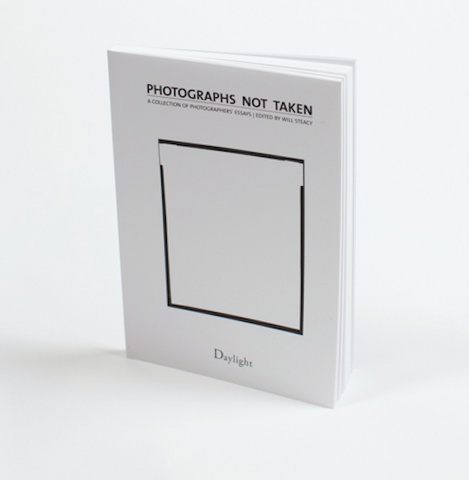
BOOK INFO Paperback, 5.5 X 8 In. / 136 Pages ISBN 9780983231615 List Price: $14.95 Featured by The New Yorker Edited by Will Steacy Photographs Not Taken is a collection of essays by photographers about moments that never became a picture. Conceived and edited by Will Steacy, each photographer was asked to abandon the camera and, instead, use words to recreate the image that never made it through their lens.Featuring contributions from over sixty photographers! Dave Anderson, Timothy Archibald, Roger Ballen, Thomas Bangsted, Juliana Beasley, Nina Berman, Elinor Carucci, Kelli Connell, Paul D'Amato, Tim Davis, KayLynn Deveney, Doug Dubois, Rian Dundon, Amy Elkins, Jim Goldberg, Emmet Gowin, Gregory Halpern, Tim Hetherington, Todd Hido, Rob Hornstra, Eirik Johnson, Chris Jordan, Nadav Kander, Ed Kashi, Misty Keasler, Lisa Kereszi, Erika Larsen, Shane Lavalette, Deana Lawson, Joshua Lutz, David Maisel, Mary Ellen Mark, Laura McPhee, Michael Meads, Andrew Moore, Richard Mosse, Zwelethu Mthethwa, Laurel Nakadate, Ed Panar, Christian Patterson, Andrew Phelps, Sylvia Plachy, Mark Power, Peter Riesett, Simon Roberts, Joseph Rodriguez, Stefan Ruiz, Matt Salacuse, Alessandra Sanguinetti, Aaron Schuman, Jamel Shabazz, Alec Soth, Amy Stein, Mark Steinmetz, Joni Sternbach, Hank Willis Thomas, Brian Ulrich, Peter Van Agtmael, Massimo Vitali, Hiroshi Watanabe, Alex Webb, Rebecca Norris WebbFeatured in the New York Times, New Yorker, TIME, Wall Street Journal, Guardian, La Repubblica, Wired, Photograph, and Artnet
View Details
Photographs Not Taken
Various Photographers
$ 14.95
Book Details: HardcoverISBN-13: 9781954119444112 pages; 45 Photographs7 x 10 inches$50 USFamily Amnesia is a visual tribute and love letter honoring the artist's Chinese American family roots in the U.S. The art book explores her family's multi-generational resilience and resistance through mixed media collages, her grandfather’s photographs, her own captured images and archival material.The book project honors the past and current lives of Asian Americans and immigrants in the U.S. by examining the incalculable and traumatic impact that historical events like the 1882 Chinese Exclusion Act continue to have on the Asian American experience. This is a painful part of our American history. Betty Yu is reclaiming that narrative through her own personal family’s story. The book will feature her grandfather’s role as a founding member of the Chinese Hand Laundry Alliance of NY, her mother’s plight as a garment worker who became a labor organizer, as well as her sister’s legacy as a community activist. Yu knows that her family's story is not unique. It is part of the larger collective Asian-American immigration experience.This book project reminds us that the rise of COVID-related anti-Asian violence is part of a larger history of systemic racism. As the U.S. government and corporate-run media continue to vilify China as a global threat, Family Amnesia recalls the anti-China and anti-Asian paranoia and hysteria that created the policies like the 1882 Chinese Exclusion Act and the 1942 Executive Order that placed Japanese-Americans into internment camps. The book will also draw visually on geo-political history, recalling narratives that mocked China as the "sick man of Asia '' and that demonized Chinese as “Yellow Peril”. Betty Yu is an award-winning filmmaker, socially engaged multimedia artist, photographer and activist born and raised in NYC. Yu integrates documentary film, installation, new media platforms, and community-infused approaches into her practice. Betty’s films and multimedia work has focused on labor, immigration, gentrification, abolition, racism, militarism, transgender equality among other issues.
View Details
Family Amnesia
Betty Yu
$ 50.00
Book Details: HardcoverISBN-13: 9781954119451180 pages; 79 Photographs12.6 x 10.5 inches$50 USEssay by Christina BartonThe Afterglow of Industry brings together photographs from a ten-year project in which artist Chris Corson-Scott repeatedly travelled the extent of Aotearoa New Zealand, seeking out unknown, or remote sites which illuminate our dysfunctional present. Following this, several years were spent researching and writing on each of the 79 photographs featured in this book. In these texts, colonial and industrial histories weave in and out of geology, pre- European Māori history, outside forces from the United States and Europe, and contemporary issues like privatisation, asset sales, the New Zealand housing crisis, and the country’s rebranding as a ‘clean & green’ tourist destination.Similar to the collapse of America’s industrial Midwest, New Zealand has also experienced the whiplash of industry vanishing. Here though, this has been complicated by much of this industry first emerging in conjunction with European colonization. Corson-Scott’s work focuses on these tensions, particularly in Te Waipounamu South Island, where the regions of the West Coast and Otago see industrial remnants contrasted with vast and complex landscapes. From these areas come images of freezing works on sacred rivers, contested mining projects, dwellings of 19 th century Chinese miners, gold processing plants still contaminated more than a century later, floods of acid mine drainage, and the demolition of factories which once built the country’s modern infrastructure. Elsewhere, on a remote sandspit is one of history’s largest whale strandings, industrial spaces are repurposed by artists, controversial hydroelectric schemes divert rivers, ancient forest remnants become tourism, and city fringe orchards are bulldozed for development.Chris Corson-Scott is an artist from Tāmaki Makaurau Auckland, Aotearoa New Zealand. His photography has been exhibited in over 40 museum and private gallery exhibitions in Aotearoa, and his work is held in permanent collections including: Museum of New Zealand Te Papa Tongarewa, Auckland Art Gallery Toi o Tāmaki, Christchurch Art Gallery Te Puna o Waiwhetū, and Ngā Puhipuhi o Te Herenga Waka—Victoria University of Wellington Art Collection. His previous publications include Evanescent Monuments (2018), and Dreaming in the Anthropocene (2017), both on Compound Press.Christina Barton is a writer, curator, editor and educator based in Te Whanganui-a-Tara Wellington, Aotearoa New Zealand. She is the former director of Te Pātaka Toi Adam Art Gallery at Victoria University, Wellington, and was previously a curator at Auckland Art Gallery Toi o Tāmaki, and Museum of New Zealand Te Papa Tongarewa.
View Details
The Afterglow of Industry
Chris Corson-Scott
$ 50.00